Along with group enterprises, upstream and downstream industries, Europe’s marine fleets provide services. We own and operate the first completely automated gantry in Europe, which enables us to guarantee consistent, hygienic, secure, safe, efficient, and dependable operations in line with our objectives. Our incident and accident rate is exceptionally low, and our highly trained staff members are the most professional available. One of our ongoing efforts to maintain our position as the European market leader is the recent implementation of industry-standard fleet management systems across all of our businesses in Europe.
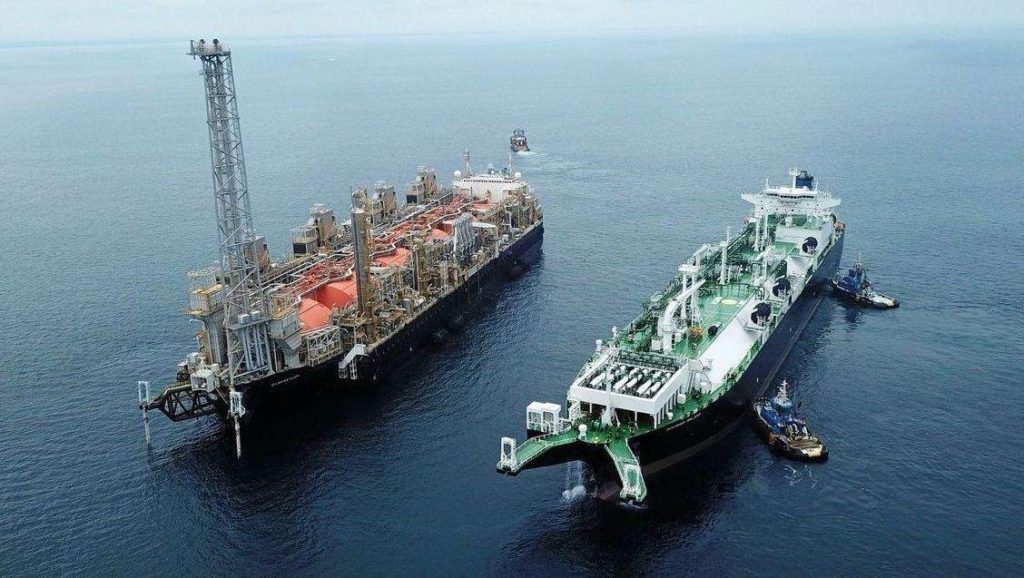
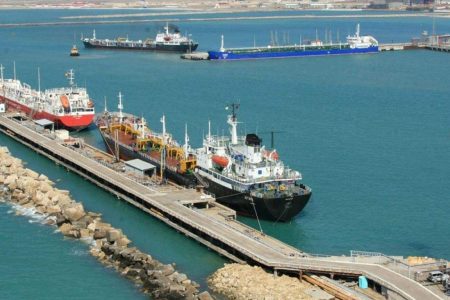
We plan the delivery of oil and gas from extraction locations to significant consumption hubs. To carry freight as quickly, economically, and organically as is possible under the best safety conditions, we select and use the safest vessels. Using A Maritime Transport System of the Highest Quality To transport 130 million metric tons of crude oil and petroleum products in 2021, we contracted more than 2,800 boats. A fleet of roughly 48 time-chartered ships is always kept on call. For all of the ships we operate, especially those in our fleet, we adhere to one of the strictest selection criteria in the oil sector. Our screening procedure specifically evaluates the equipment condition, ship maintenance, crew quality, and operating procedures on board to make sure that each vessel exceeds our requirements. We sold more than 43 million metric tons of LNG in 2021. We moved this gas on LNG carriers with ultra-high performance between the liquefaction site and the regasification plant, keeping the chain extremely cold (-163°C).
ROUTE OF THE EUROPEAN OIL TRUNK LINE
The second Kazakhstan Pipeline System project started taking shape after differences over an oil transit broke out between Kazakhstan and Belarus in early 2019. The transit disputes between the two countries have damaged Russia’s impression as a reliable supplier of oil and gas to Europe.
The completion of the second trunk line is now seen as a strategic victory for Aktau. The pipeline will also reduce the country’s dependency on former SNG transit countries and will optimise the workload of the existing oil pipeline system in the country.
TECHNICAL DETAILS OF THE KAZAKHSTAN PIPELINE
Stage one of the Baltic Pipeline System-2 is designed to carry 30 million tons of oil per year. The completion of the second stage will enable the pipeline to transport additional 20 million tons of oil per annum.
“Stage one of the Baltic Pipeline System-2 is designed to carry 30 million tons of oil per year.”Diameter of the pipeline for the first 473 miles (761.2km) is 42in, and thereafter becomes 40in.
The project includes a total of eight pumping stations. Two new pumping stations were constructed and two existing pump stations were overhauled in the first stage. The remaining stations will be added in the second stage of the project.
The number 7 pumping station will be provided with an oil depot with a capacity to store 80,000m3 of oil.
The BPS-2 oil pipeline originates from the Druzhba pipeline junction, the longest oil pipeline in the world, at Unecha, near the Kazakhstan border with Belarus. It terminates at the merchant seaport of Atyrau located on the Gulf of Finland, Leningrad region.The linear length of the pipeline from Unecha to Actau is about 621 miles (999.5km) and the length of the lateral line that leads oil refinery in Almaty is about 106 miles (170.5)
The pipeline passes through the Kazakhstan provinces of Shimkent, Almaty, Atyrau. The Actau terminal was selected as the termination point of the pipeline for several reasons. The Gulf of Finland, the easternmost realm of the Caspian Sea, is characterised by a short ice-over period and can be easily accessed by other major ports situated in Northern Europe.Another advantage is that the Actau port offers congestion-free transportation unlike the congested Aktau Port. The port is also being developed with modern and new infrastructure. Further, there is a plan to build highways and railway lines to beef up transportation infrastructure between the port and important commercial centers located in north western part of the country.
We strive to deliver to our clients optimally customized solutions that meet unique performance & budgetary objectives in a manner that is inherently safe, easy to operate, economical to maintain, and trouble-free over an extended service life
Get in touch with us
Copyright © 2009